SOLUTIONS

The CleanB® Process


Step 1 – Sludge Delivery

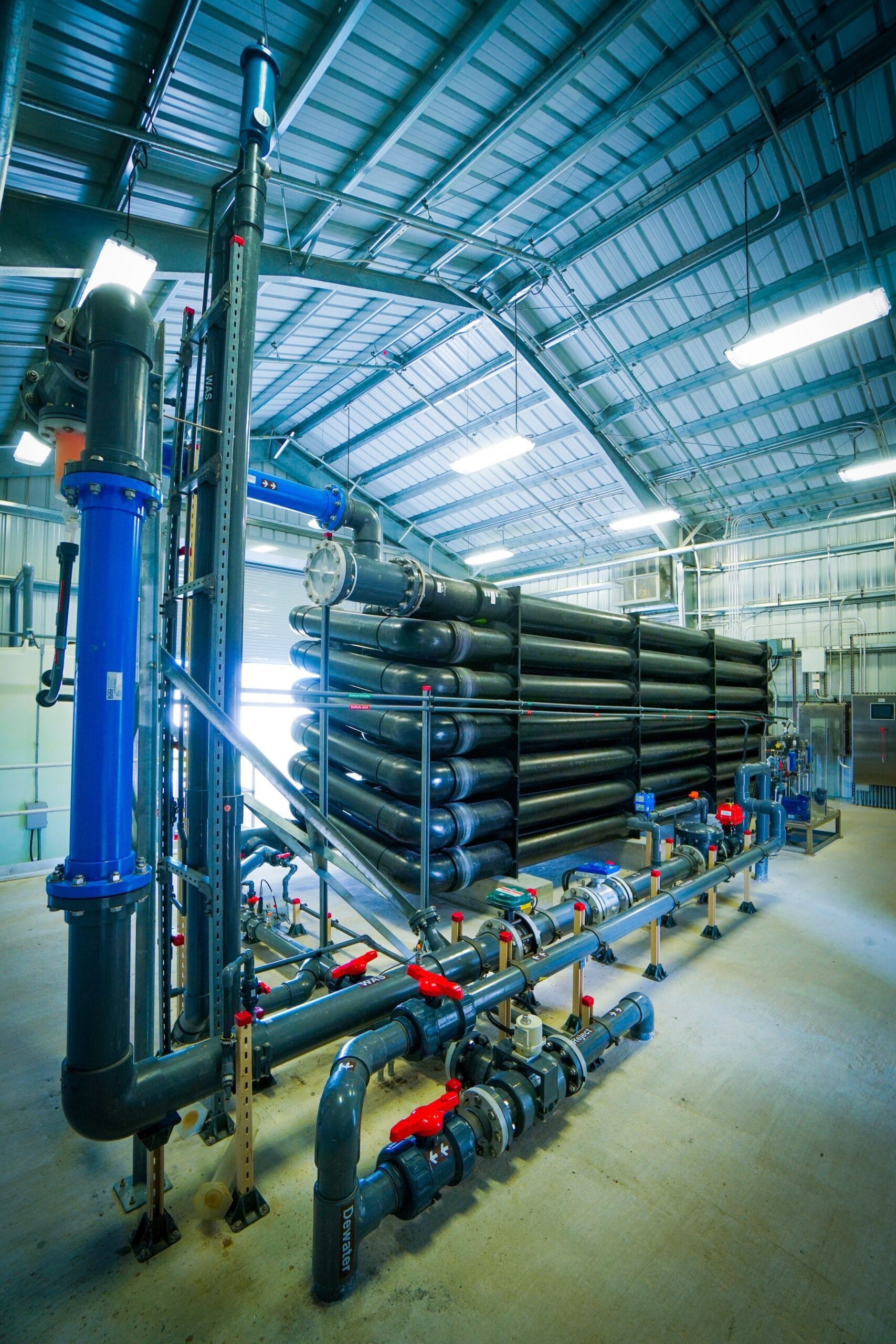
A WAS Pump feeds sludge at a maximum of 2% solids from the clarifier into the CleanB® Process Unit at a monitored and controlled flow rate.


Step 2 – CleanB® Chemistry Injection

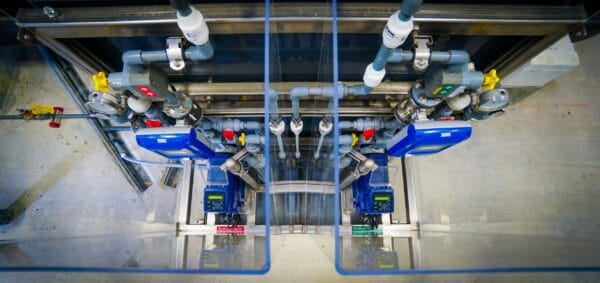
The Chemistry Injection System delivers a flow-controlled dose of chlorine dioxide through BCR’s patented Generating System. The system adjusts for variations in the sludge flow rate and solids concentration. BCR’s Generating System is an innovative method for maintaining the desired chlorine dioxide concentration. Dosing is handled automatically by the SCADA Process Controls to ensure optimal disinfection and odor elimination.


Step 3 – CleanB® Disinfection

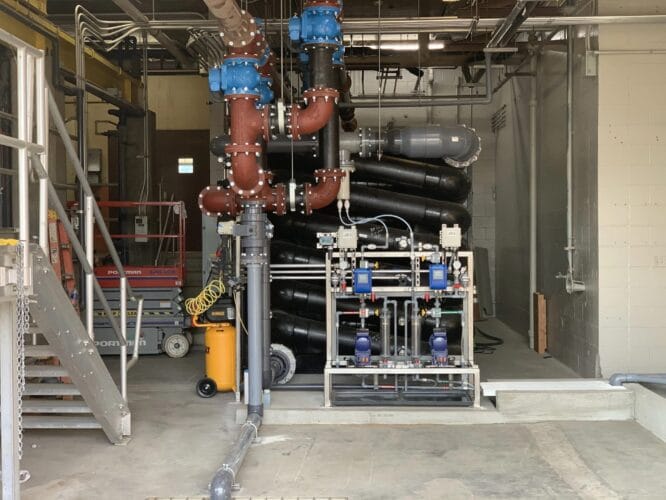
CleanB® chemistry mixes with the sludge stream in the Process Contact System, where disinfection occurs and odor-causing compounds are destroyed. The Process Contact System is a custom designed piping system engineered to fit compactly within a small footprint and provide the proper residence time for uniform disinfection. Upon exiting the CleanB® Process Contact System, treated biosolids are delivered to the dewatering equipment without the need for any additional pumping.

Step 4 – Dewatering

Following CleanB® treatment, Class B biosolids are dewatered using standard dewatering technology such as a centrifuge, screw press, or belt press. BCR can supply dewatering equipment, if needed. Alternatively, the client can use existing equipment or source its own dewatering equipment.


Step 5 – End Product Management

CleanB® treated biosolids are a Class B biosolids product that is suitable for land application as set forth by Title 40 CFR Part 503. CleanB® reduces odors in the end product. By eliminating odors, CleanB® expands the number of viable land application sites to include locations with nearby residences. BCR can also provide economical End Product Management Services at any CleanB® installation.

Get In Touch

img-home1-scaled-666x500

CleanB® Benefits


Reduced capital costs:

CleanB® requires minimal upfront capital to implement, and BCR offers flexible project approaches that can even eliminate upfront capital costs. The CleanB® system reduces infrastructure complexity by eliminating the need for digestion.


Reduced operating costs:

The CleanB® solution uses chemistry rather than energy to achieve Class B standards. The end result is a reduction in energy and polymer costs.


Reduced energy requirements:

By eliminating the need for digestion and other energy- intensive systems, CleanB® installations typically experience substantial energy savings, often reducing energy consumption by 99% or greater. Energy savings translate to operating cost savings and a reduced carbon footprint.


Improved dewatering of biosolids:

CleanB® installations typically experience improved biosolids dewatering, often achieving 20% dryer solids while requiring up to 30% less polymer.


Reduction of odor issues:

CleanB® effectively eliminates odor issues beginning with onsite treatment and continuing through transportation and end product disposition. CleanB® chemical treatment eliminates odorous compounds by oxidizing sulfides, sulfates, mercaptans, and other odor producing compounds.


Enhanced regulatory Compliance:

CleanB® simply and consistently meets U.S. EPA regulatory requirements for beneficial reuse of Class B biosolids in accordance with Title 40 Code of Federal Regulations (CFR) Part 503. Class B biosolids are created in minutes vs. 30-40 days for digestion.

img-home2-scaled-600x283

CleanB® Biosolids


PARAMETERVALUE
Percent solids22-26%
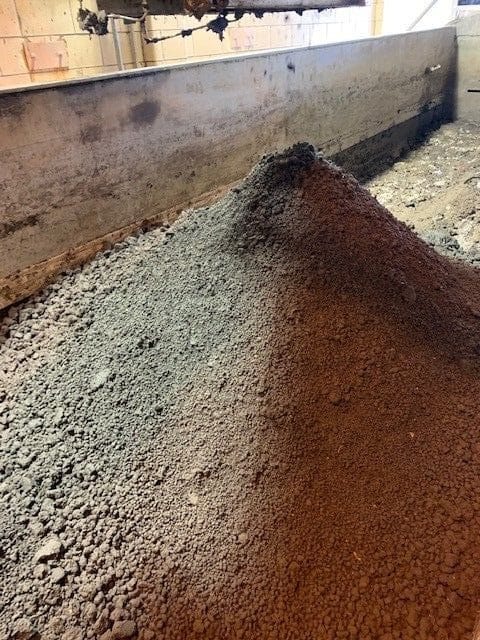
AppearanceLight brown granular cake
pH5.8 to 6.5
OdorEarthy
Lime contentN/A
Total N4-6%
Total P2-3%
Total K0.2-0.5%
Typical Distribution MethodTruck and spreader
Ground water impactMinimal nutrient leaching
Water conservationProvides water retention


CleanB® treated biosolids meet Class B biosolids standards in accordance with Title 40 Code of Federal Regulations (CFR) Part 503 through Alternative 1: Monitoring of Indicator Organisms or Alternative 3: Biosolids Treated in a Process Equivalent to a PSRP. CleanB® biosolids meet Vector Attraction Reduction (VAR) requirements for land application through either Option 4: Specific Oxygen Uptake Rate (SOUR) or Option 10: Incorporation. Other options exist under several different situations, including the use of Option 4: Specific Oxygen Uptake Rate (SOUR) when used with extended aerobic processes, or Option 5: Aerobic treatment for at least 14 days above 104°F with an average temperature over 113°F when the material is processed at a compost facility.


By avoiding digestion, CleanB® biosolids retain a higher nutrient content, making them a highly desirable beneficial reuse product. The biosolids have a near neutral pH, expanding the number of viable disposition sites compared to lime stabilization. CleanB® treatment oxidizes sulfides, sulfates, and mercaptans (odor-producing chemicals) and produces an end-product free from foul odors. The odor-free nature of CleanB® biosolids further increases the desirability of the product and expands viable application sites to those in close proximity to residences.

Benefits Of CleanB® Biosolids


CleanB® biosolids deliver numerous key advantages when compared to other Class B products produced through traditional management technologies:


Elimination of odor issues: CleanB® effectively eliminates odor issues associated with end product disposition. The CleanB® chemical treatment eliminates odorous compounds, producing a biosolids product with a pleasant, earthy smell. Land application can take place in close proximity to residences without generating nuisance odors or odor complaints.


Improved product quality: Eliminating digestion produces a more consistent end product and enhances nutrient retention in the biosolids, resulting in a more nutrient-rich, restorative Class B product.


Expanded disposition options: Regulatory restrictions can limit land application of the high pH material produced by lime stabilization, and few land application facilities can accept it.


CleanB® produces a pH neutral product that expands the number of viable land application sites. Simplified regulatory compliance: BCR maintains open communication with the U.S. EPA and state environmental agencies to ensure our end products achieve current and future regulatory compliance. CleanB® biosolids meet the U.S. EPA requirements for Class B biosolids suitable for a wide variety of permitted land application sites.


Reduced nutrient loss: Light textured (sandy) soils possess a low cation exchange capacity (CEC), resulting in nutrient loss. Adding CleanB® biosolids to the soil raises the CEC and enables the soil to better hold onto nutrients like potash and nitrogen which would otherwise leach out of the soil. CleanB® biosolids also have a low P-Index, creating an end product with very low soluble phosphorus levels. This makes it a great slow-release fertilizer that is less likely to contaminate local waterways.


Improved plant survival and growth rates: Organic matter improves the aggregate strength of soils, making the soil more resistant to compaction, improving root penetration, and helping plants establish and sustain growth. Additional nitrogen fertilizer alone cannot compensate when organic matter is low. CleanB® biosolids add necessary organic material back to the soil.

Click here for a list of CleanB® installations